
So, today is Pete’s 70th Birthday – happy birthday Mr Collins! Hope you enjoyed your day 😘 xx
We were going to go to San Roque but changed our minds this morning as the place we want to visit (which is near San Roque but not actually San Roque!) was not open today… so we’ve postponed that until tomorrow.
Instead, we decided to pay a visit to the “Cueva de la Pileta” which is between Jimera de Libar and Banoajan on the other side of the valley. Luckily, we had spotted that the cave is only “open” for 3 hours per day so we got up and went fairly early, which was lucky as, arriving about 11.15, we were asked if we had made a reservation (?) as the only way you can view the caves is with a guide… luckily, the next guided tour was to start at 11.30 (phew) so we decided to join a small group of around 12 people (including us)… The caves are amazing… if we were in the UK, we’d probably be given a hard hat and you’d find that there was electric lighting, strategically placed, throughout the cave together with non-slip flooring at key slippery bits of the path / steps! Of course, this being Europe / Spain, none of that – we were given a small battery powered lantern between each couple and we were away with the guide who had a couple of torches! Here’s some info and photos from t’internet as you’re not allowed to take photos in the caves themselves because it can damage the cave paintings!
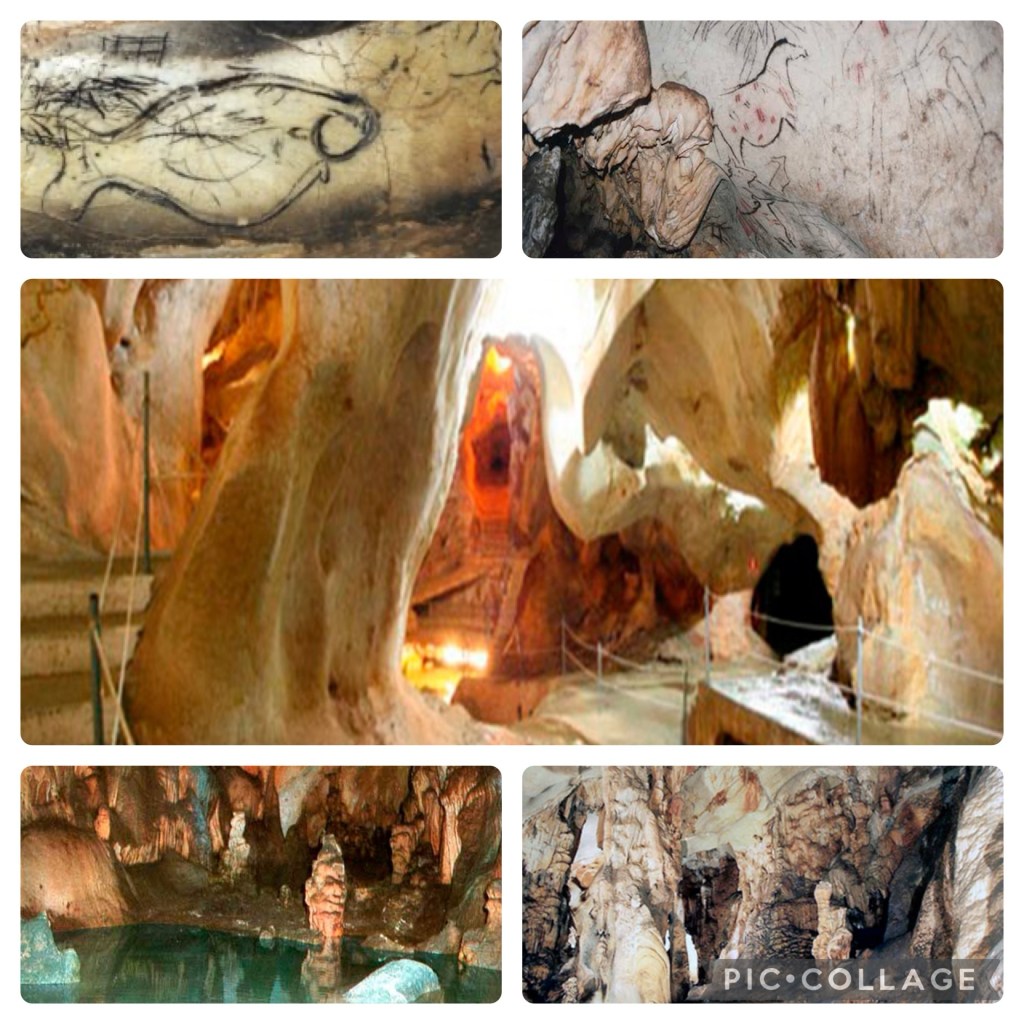
La Cueva de la Pileta
The Cueva de la Pileta was found by José Bullón Lobato, the farmer who rented the farm on which the caves are located, when he decided to explore a chasm near his house from which flocks of bats would emerge every evening in spring 1905. His aim was to look for guano to fertilise the land and increase production. The chasm turned out to be the entrance to a large cave, in which he found bones, ceramic pots and paintings on the walls, depicting animals and signs he had never seen before.
For its occupants the cave served a dual purpose: as a dwelling and a place of burial.
The cave, which was declared a National Monument in 1924, contains cave paintings dating from between 28,000 and 8,000 BC. They depict animals, mostly goats, horses, deer and bovine species. The cave’s most important paintings are those known as ‘The Pregnant Mare’ and ‘The Fish’ (see pics!). The men inhabiting the cave were Paleolithic hunter-gatherers, who utilised Mousterian instruments (stone tools) and also used the cave as a place of burial (several skeletons have been found!).
The “tour” around the cave lasted almost 1 and three-quarter hours and was well worth the 10 Euros each we paid… Pete, who has experienced a cave or two in his time (he once spent 4 days in one on his cave instructor course!), thinks it’s one of the best caves he’s ever seen – what made it for me, was the live bats that were flying in and out almost constantly. Also, if you think how old the paintings are, and try and imagine the people who lived or used these caves (there is evidence of fires etc), it’s a remarkable thing… at one point, everyone turned their lights off and stayed silent for about 30 seconds… I’ve never known (or seen?) such blackness or heard(?) such silence! It was “awesome”! 🤫
After the caves, we decided to carry on along the road, which led to Ronda, and do a circular route back to our accommodation, stopping along the way for a birthday lunch for Pete… Pete had an Iberian Pork dish whilst I had a chicken dish with a meat and mushroom stuffing – something local to do with Ronda… and absolutely lovely 😋
Some pics from today:
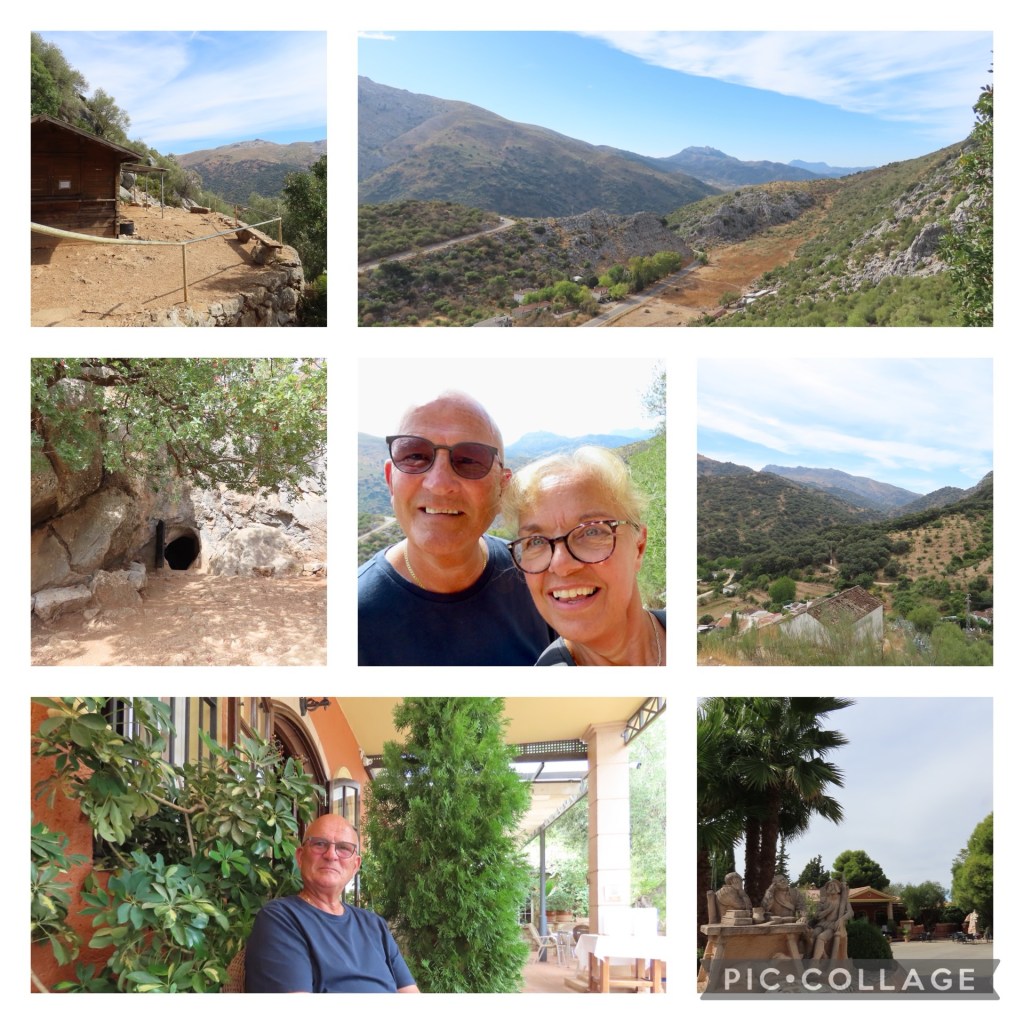
Top Left: The ticket office at the Cueva de la Pileta; Top Right: The view from the waiting area for the caves; Middle Left: The entrance to Cueva de la Pileta; Bottom: Birthday boy having lunch near Ronda…
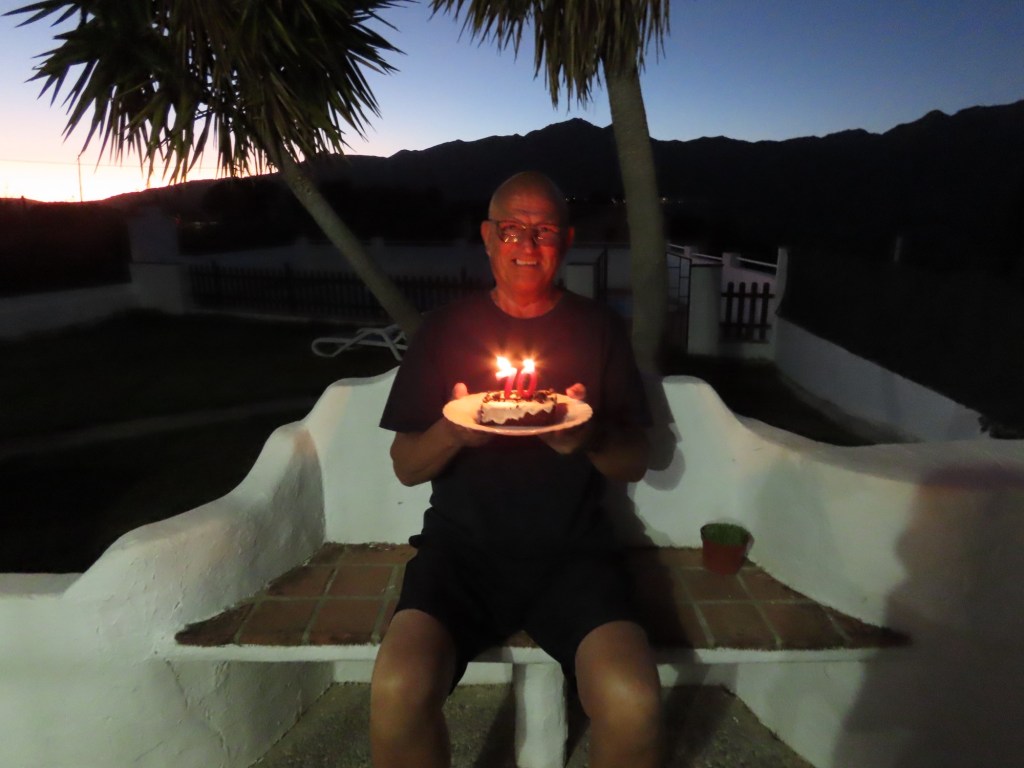
And finally, one of the Birthday boy with his birthday cake a la Bakers of Cortes de la Frontera!


 All the gubbins…
Leave a reply to Chris in Wales Cancel reply