
Yesterday, 16th October 2024, the weather was pretty ropey in the morning with a lot of rain so we had a morning in the apartment before setting out, on foot, for the 4.2km walk into Salamanca.
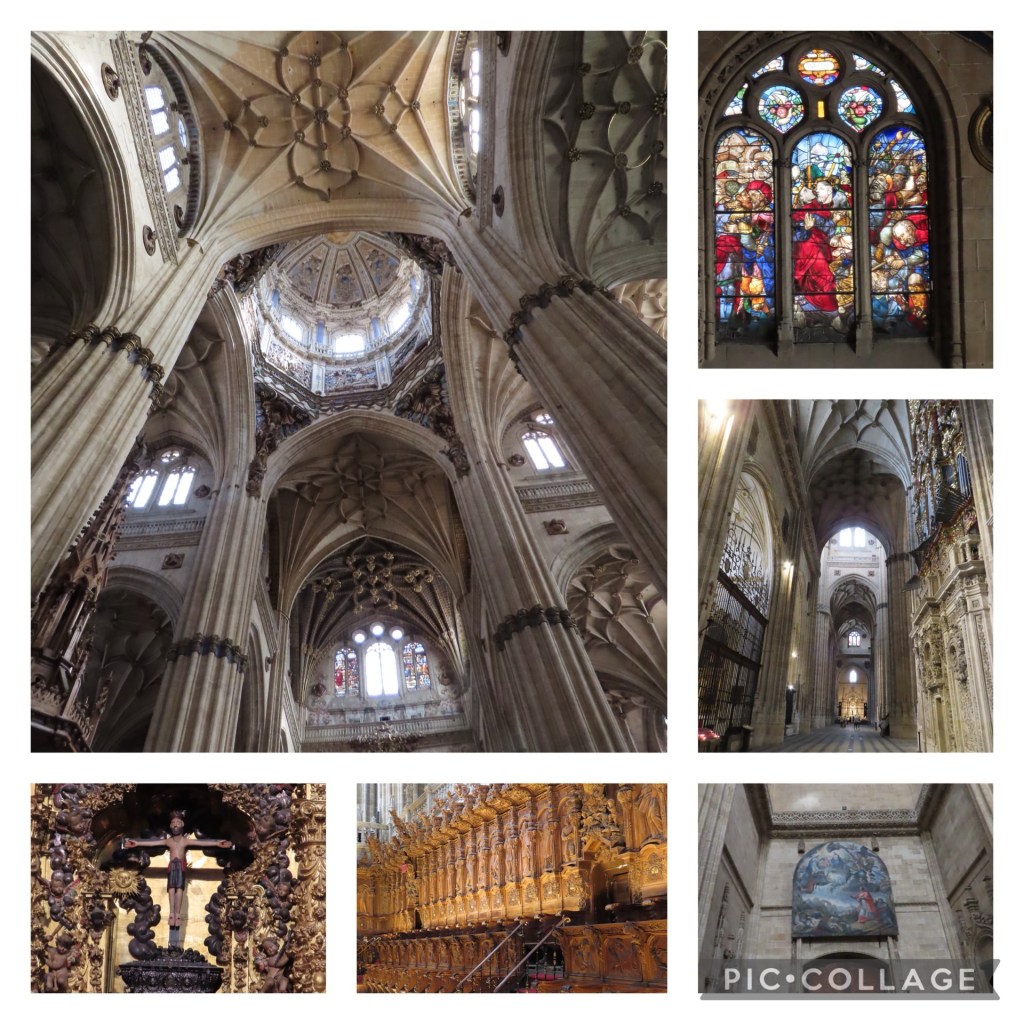
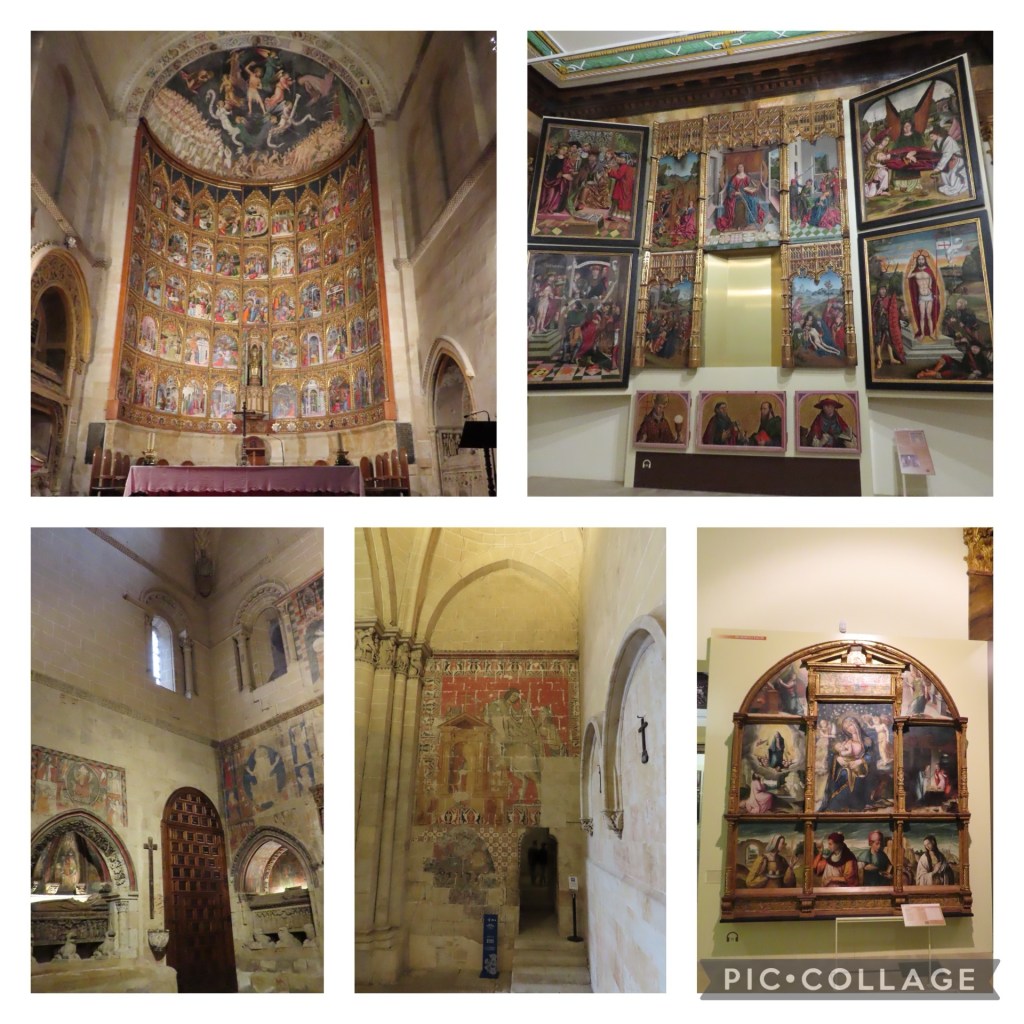
There is a lot to see and decided that a nice stroll around and a bus ride back would be a good way to spend the day… it was interesting to see all the landmarks but, if I am honest, I think I prefer the more archeological sites! If architecture and churches are your thing then it’s definitely worth a visit!

Plaza Mayor, Salamanca. Bottom – those Crane nests get everywhere!
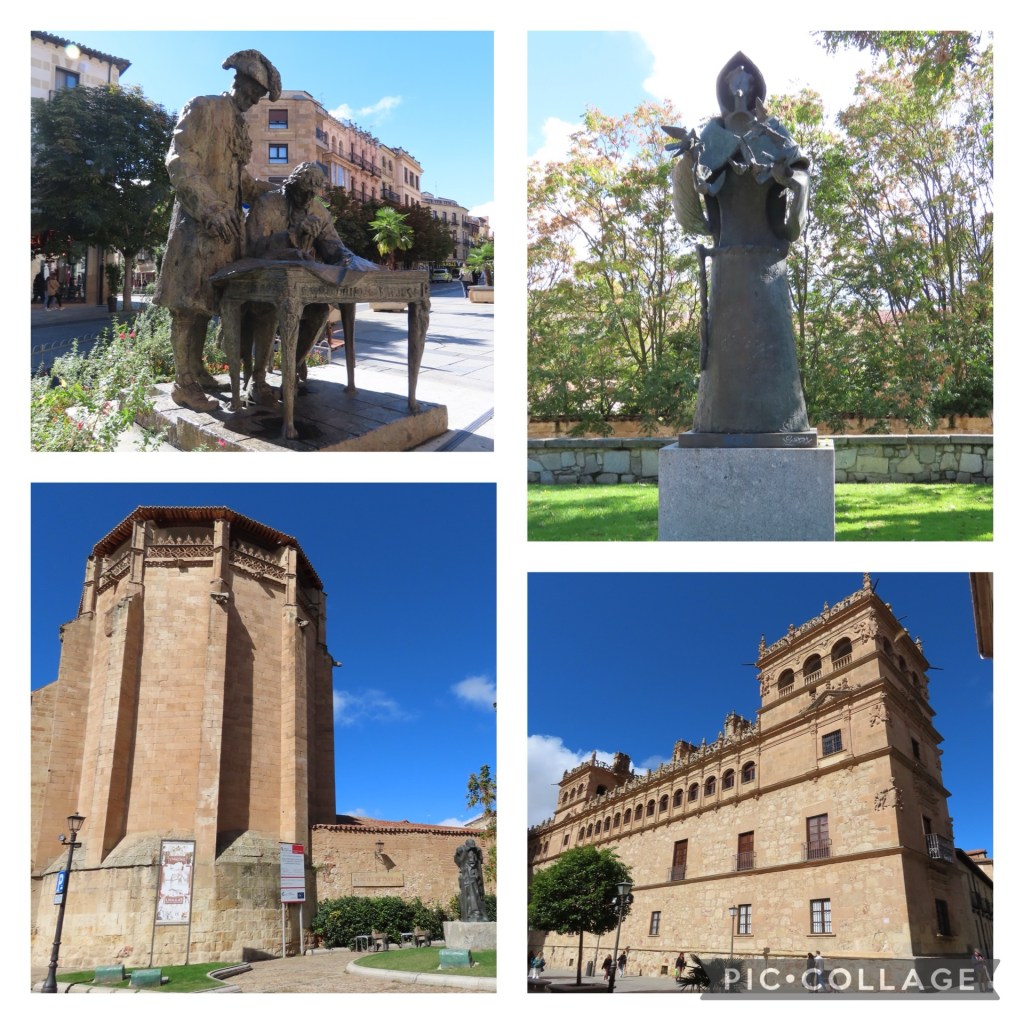

Casa de las Conchas (House of Shells), Salamanca

It’s fair to say that wherever we venture in the world or UK, we always try to find an Indian restaurant for a meal if we can… Pete’s research told us a few weeks ago that there was one in Salamanca (Hola India) & we’ve been looking forward to it ever since 🤣. Yesterday was the day! It did not disappoint and, quite by accident, our meal coincided with a downpour which we therefore managed to avoid!

Today, 17th October, we thought we would visit the Battle of Arapiles (the battle of Salamanca!) site.
Arapiles is a small village about 12km by road, south of Salamanca. We thought it was quite good timing as they have in “Interpretation” centre on the battle which, according to the Internet, is only open on a Thursday and Saturday, so we set off in good time so we could include a mooch round this as part of our visit… however, it wasn’t open which was a bit of a shame! Still, we enjoyed the walk!
Information about the battle from the National Army Museum (online): “Wellington marched on Salamanca, entering the city on 17 June. Ten days later, he took three of the outlying forts in an attempt to force Marmont into action. With Marmont unwilling to commit, Wellington moved out to manoeuvre against him, probing for an advantage that would allow him to force battle.
Wellington’s intelligence reports, however, warned that Marmont was soon to be reinforced by troops sent by Joseph Bonaparte. Fearing he had lost the initiative, Wellington was forced to consider the abandonment of Salamanca and retreat back to Portugal.
By 22 July 1812, the two armies were west of Salamanca. Skirmishes broke out around two flat-topped hills that dominated the area, known as the Greater and Lesser Arapiles. The British occupied the Lesser, while the French had the Greater.
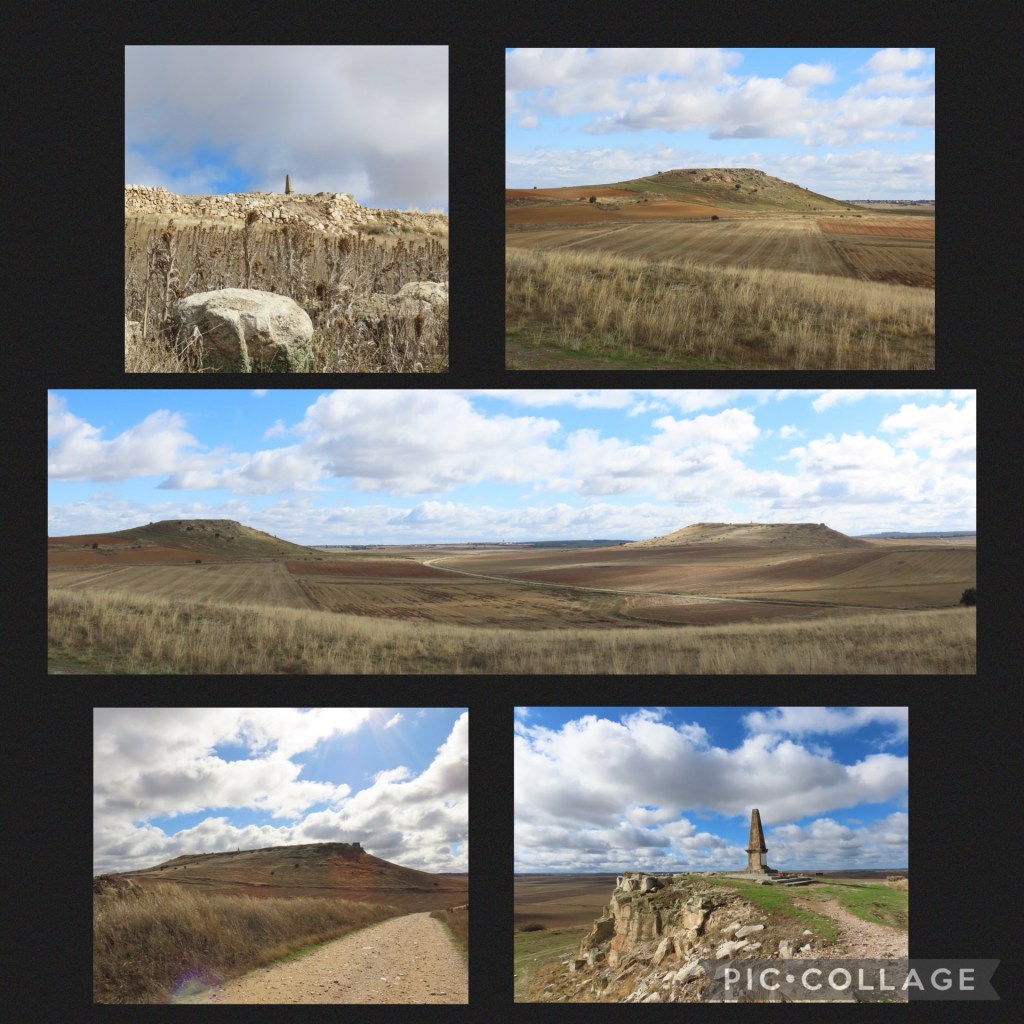
The middle pic is a panoramic shot of the Arapil Chico (Lesser) on the left and the Arapil Grande (Greater) on the right;
Top Right / Bottom Left: Monument on Arapil Grande; Top Right – Arapil Chico; Bottom Left – Arapil Grande
As the armies continued to move south-west, with Marshal Marmont attempting to block Wellington’s route to Portugal, Wellington’s forces remained hidden behind ridges north-east of the Lesser Arapile.
Marmont believed he knew his enemy. Wellington was a defensive general, the kind of strategist who would never be attacked on ground not of his own choosing.
When Marmont noticed dust clouds created by Wellington’s baggage train, he believed his whole army to be in retreat. He instantly ordered three divisions to sweep quickly westwards to cut off Wellington’s escape.
Wellington immediately seized his opportunity. Realising that Marmont had overstretched his forces, he launched a series of hammer blows against the French columns. Major-General Edward Pakenham’s 3rd Division surprised Marmont’s left wing, which was shattered.
Wellington then unleashed Major-General John Gaspard Le Marchant’s cavalry brigades, causing further havoc among French lines and accounting for ‘40,000 Frenchmen in 40 minutes’. Le Marchant himself was killed trying to break a French square.

Early in the battle, both Marmont and his second-in-command, General Jean Pierre Bonnet, had been injured. Command passed to General Bertrand Clausel who launched a counter-attack against Wellington’s centre.
Against a lesser commander, this might have saved the French army. But Wellington was equal to the task, bringing up reinforcements commanded by Major-General Henry Clinton to shore up his middle. By the end of the day, only General Maximilien Foy’s 1st Division remained intact. Five of the eight French divisions had been devastated.
Marshal Marmont’s army lost at least 14,000 men and 20 guns, while allied losses were around half as many.
The French defeat would have been even more disastrous had the Spanish garrison not abandoned the river crossing at Alba de Tormes. Much to Wellington’s displeasure, the French were allowed to escape to safety.
Salamanca proved that Wellington had the ability to manoeuvre and attack in the open field, dispelling his reputation as a mainly defensive general. The outstanding victory gave the British and their allies a psychological superiority over the French that would last throughout the remainder of the war.
Following the victory at Salamanca, Wellington was able to liberate Madrid. Joseph Bonaparte’s authority in Spain was undermined and Spanish guerrillas were encouraged to increase their operations against the weakened French garrisons.
The Battle of Salamanca persuaded the British government that the war in the Peninsula was worth pursuing. And the subsequent allied victory at Vitoria (June 1813) helped to encourage the Russians, Prussians and Austrians, who were fighting Napoleon’s armies elsewhere in Europe, that the emperor could be defeated.
Wellington’s forces entered France in October 1813, forcing Napoleon to abdicate in April the following year. Salamanca had been one of the key turning points in the conflict”.
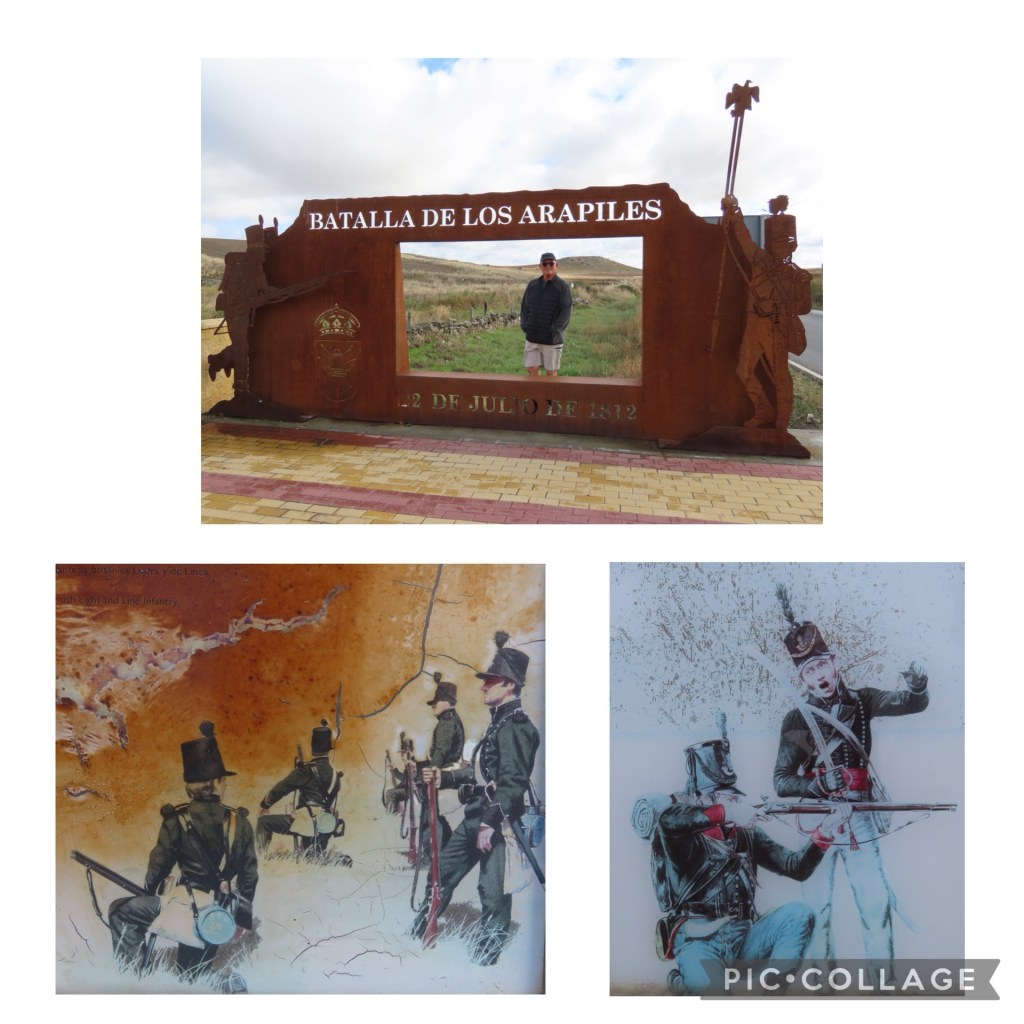
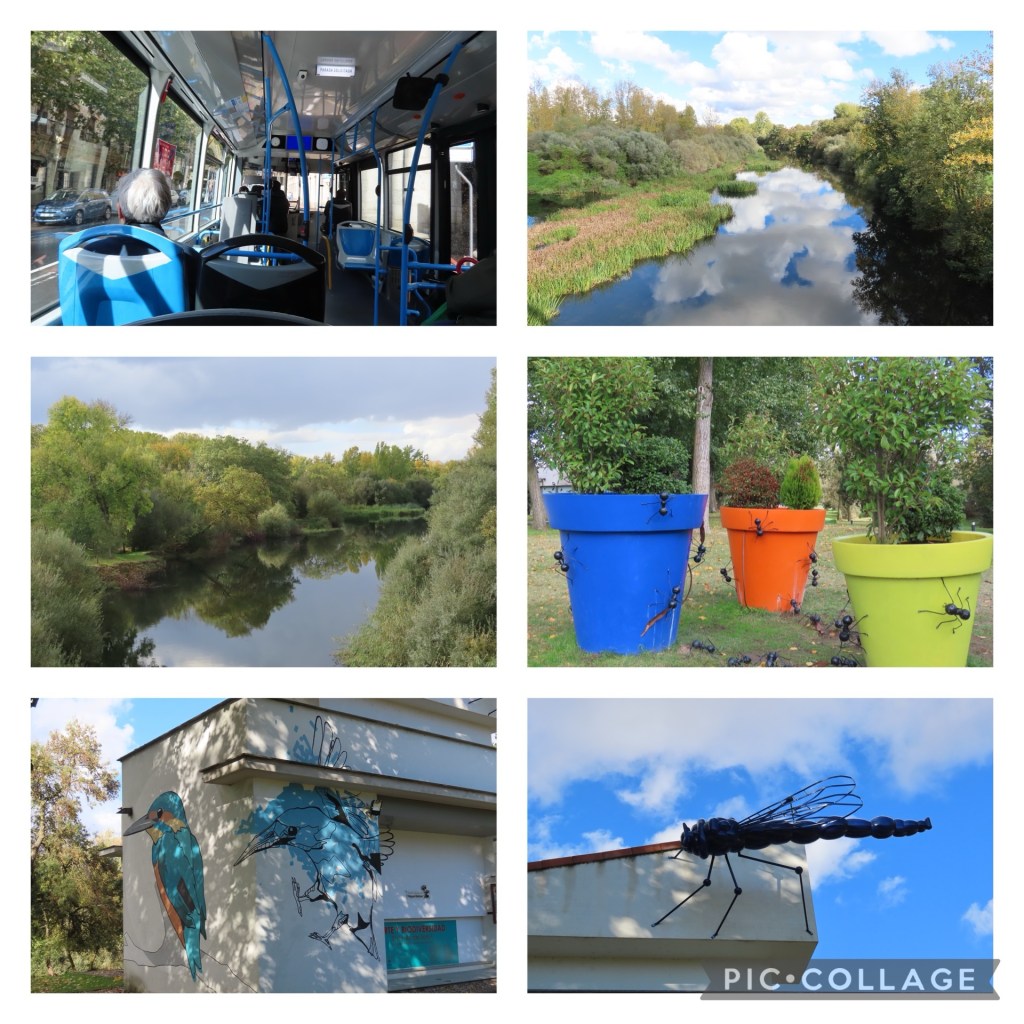
Following our walk, we headed back to Salamanca and decided to go and find the “Romano” bridge which every self-respecting Spanish city has to have! The Puente Romano de Salamanca gives a great view of the two cathedrals…
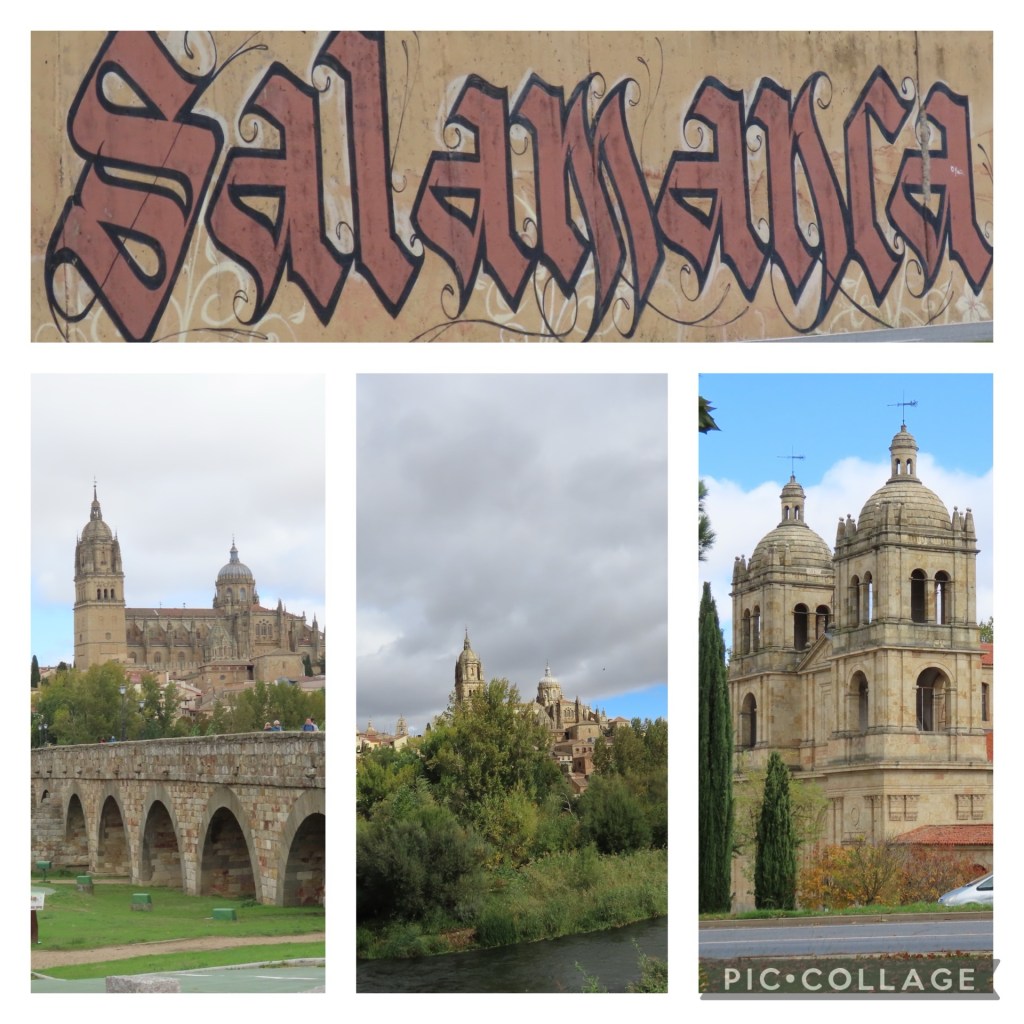
Top – some local graffiti; Bottom Left – the Puente Romano de Salamanca with a view of the two cathedrals in the background – the new is the left side and the old the right! Bottom Right – Iglesia Nueva del Arrabal
So, that’s our time in Salamanca over and tomorrow we move on to a place near to Oviñana in Asturias in the North of Spain on the Atlantic coast… it’s a journey of just under 400km and should take us, with a stop or two, around 4.5 hours… we are on the move again! Laters xx
 All the gubbins…
Leave a comment