
Another busy few days including a visit to, and good walk around, the border town of Badajoz followed by packing our bags and setting out for Salamanca, about 280km further north (up Route 66 (well, the A66!))…
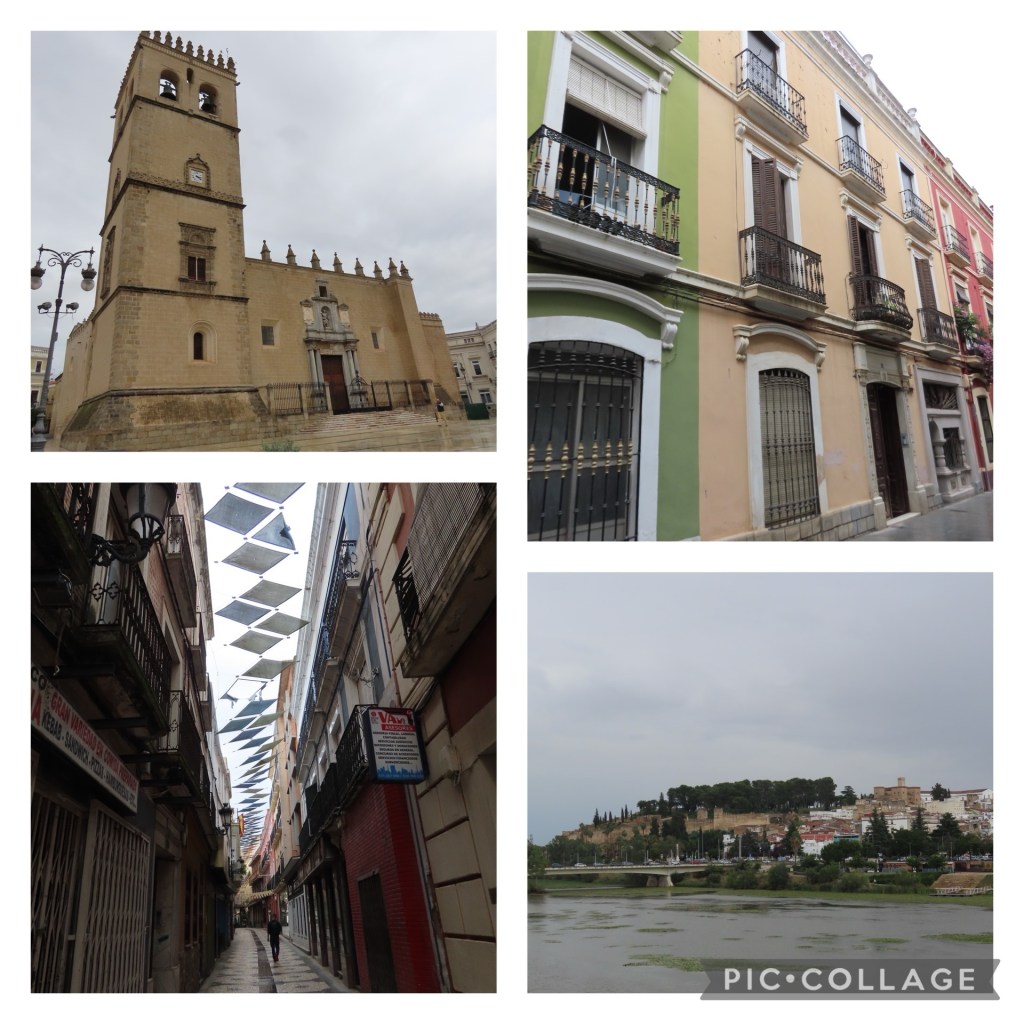
On the 14th October, our 2nd full day staying in Calamonte near Mérida, we set out on the 50km (45 mins) drive to Badajoz. This is one of the battle honours shown on the Royal Green Jackets cap badge and why we choose to visit – it’s also the setting for one of Bernard Cornwell’s “Sharpe” stories “Sharpe’s Company” (anyone else remember a young Sean Bean ❤️ depicting the fictional soldier Richard Sharpe on telly in the early 90s?) which told the story of the siege of Badajoz…
Badajoz is about 4 miles from the Portuguese border – we did think about nipping over the border just to be able to say we’d been to Portugal too and took our passports along just in case. To be honest, the Alcabaza (the Citadel) was much larger than we had expected & took us much longer to walk around than we thought it would! After that & a walk around the town itself, there was no time for a jaunt to Portugal too!
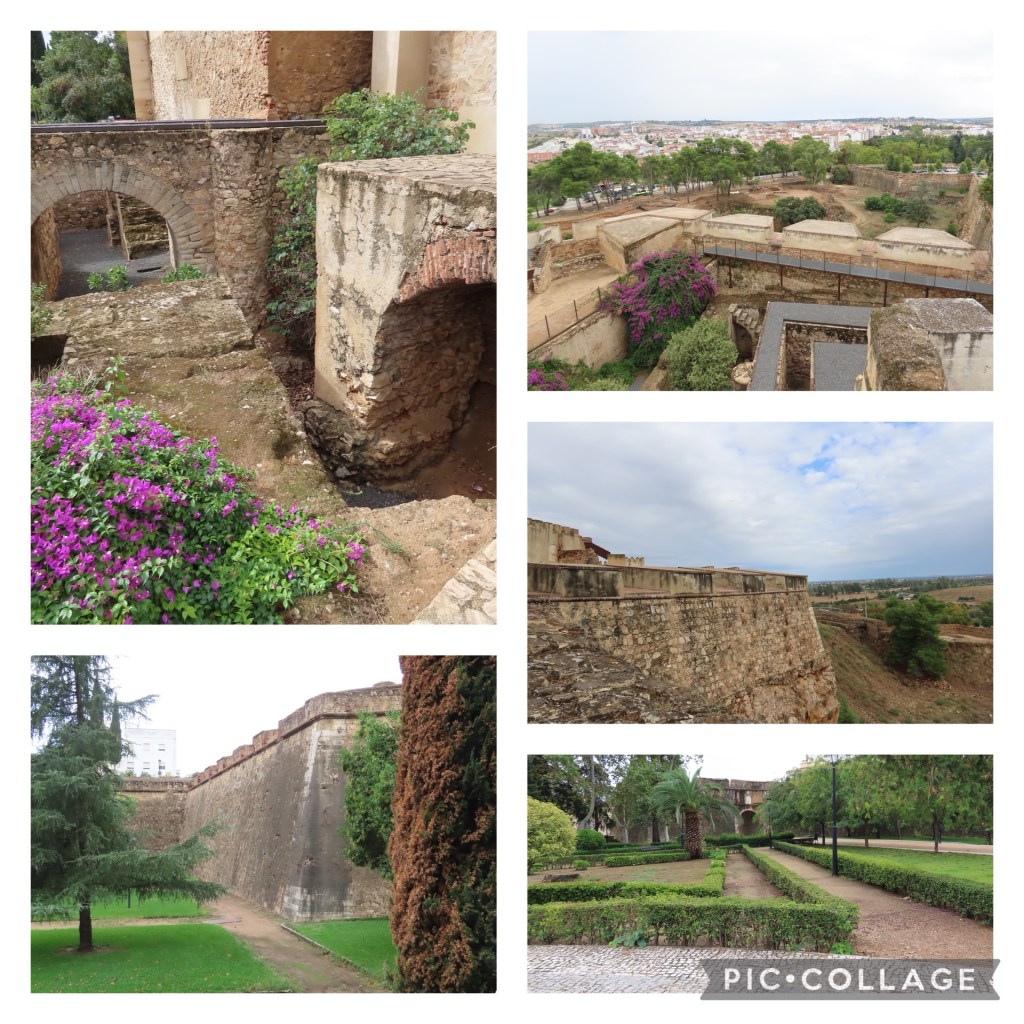
According to Wikipedia, the Citadel in Badajoz was founded by Abd-al Rahman Ibn Marwan in 875 who, after leading several rebellions and being expelled by Mérida, was given the chance to found a new city which he did… Badajoz. In building the Citadel here, it gave Badajoz a strategic role in controlling the passage from Portugal to central Iberia, Spain.
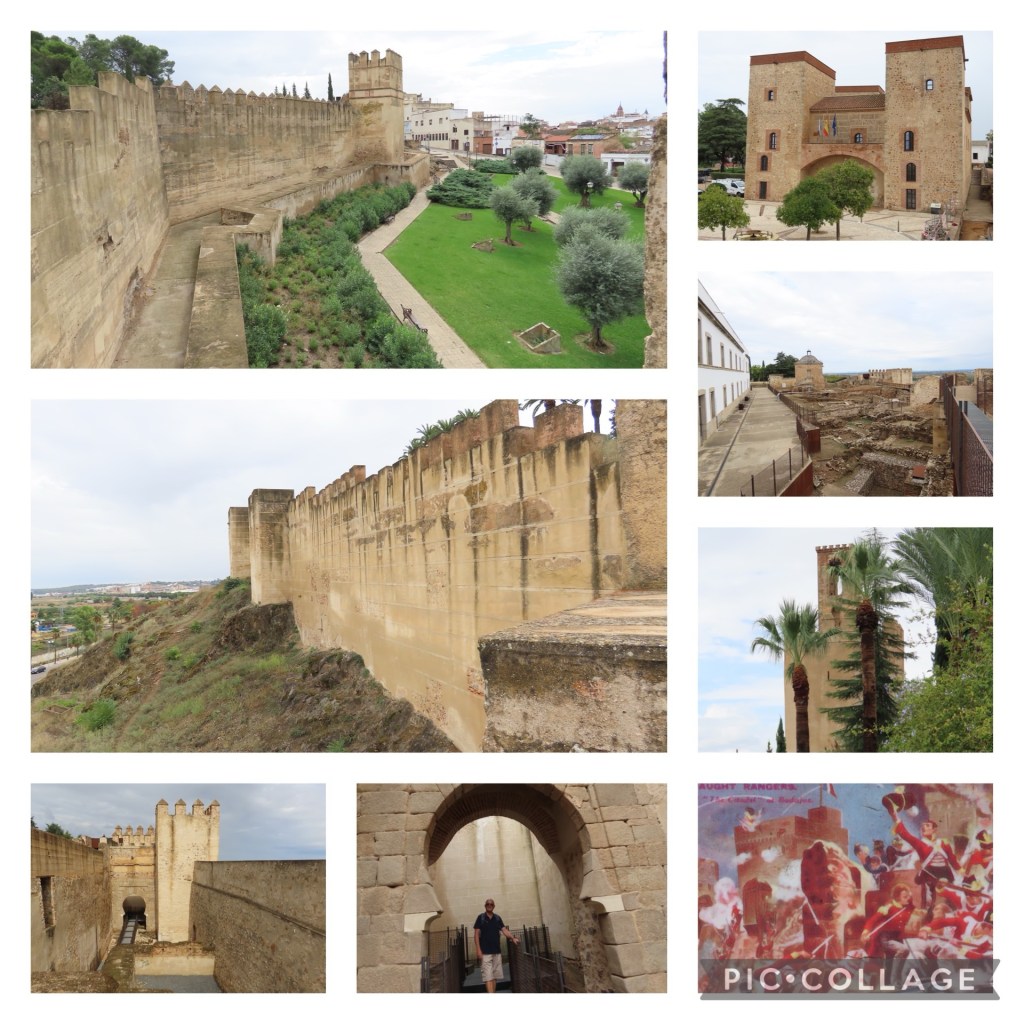
The current line of walls date mostly from 1169 (the Almohad age), although there are traces of earlier work from 913 and 1030; The last Muslim restoration was carried out in the 13th century before the capture of the city by the Christian King Alfonso IX of Leon.
During the Peninsular War (1805-1813) the citadel was successfully stormed by allied-British (of which the Green Jackets were part… although not called the Royal Green Jackets at that time)), Spanish & Portuguese forces under the command of the Duke of Wellington. As a result, the Napoleonic hold on Western Spain was significantly weakened, and the Storming of the Alcazaba became part of Wellington’s growing reputation for success in battle.
After our stroll around the Alcazaba, we decided to head to the Puente de Palmas bridge and cross over the Guadiana river so we could walk through the park on the opposite bank… it must have been Uni kicking out time as we shared the walk across this pedestrian bridge (if you exclude all the electric scooters that is! 🤣) with students strolling home from lessons… made me think back to my early 20s when, although life was certainly not without it’s dramas (all of my own making!), I think I was braver and less inclined to give a flying {insert your favourite word here… I, for the sake of decency will go with “monkey” 🤣} about much!
The Puente de Palmas has been destroyed by flood several times over the centuries… after a “strong flood” in 1545, the current bridge was finished in 1596, when Philip II was King of Spain. Before the bridge was built in the 15th century, the city lacked a bridge, and the river was crossed by barges or by using fords when it was possible. Another flood in 1603 destroyed 16 of its 24 spans, leading to its reconstruction with another rebuild taking place in 1833 after a flood in 1828 which resulted with the whole bridge being covered, which sounds incredible! Nomadic cattlemen traditionally called the Palmas Bridge the “Silly Bridge” because no toll fee was ever charged for crossing it.
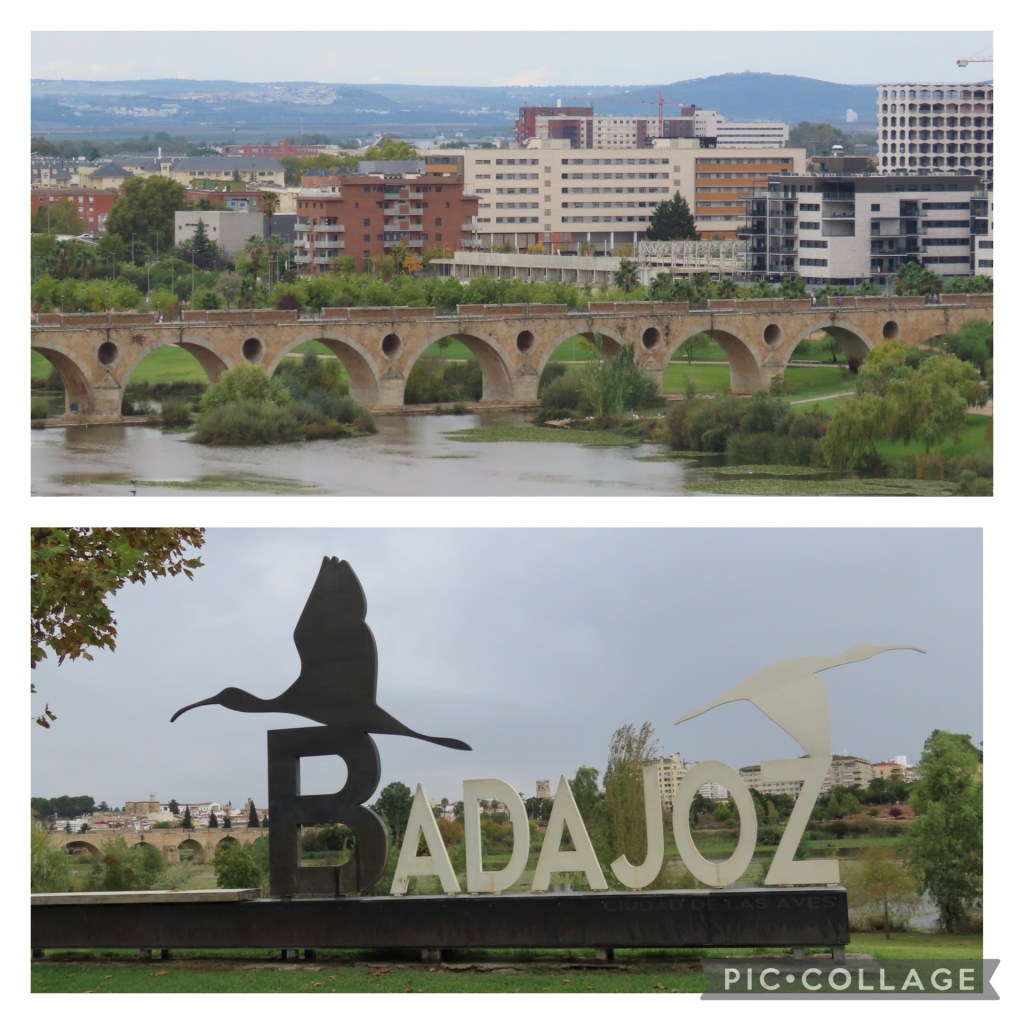
The Puente de Palmas
That would be some flood for the river to cover it!
On reaching the opposite bank (these bridges are long… this one is 600m!) we dropped down to the park that runs along the opposite bank. The weather was not great and by the time we had turned back to cross via a different bridge (Puente de la Universidad – a road bridge with plenty of traffic!), it was raining quite heavily… still, it didn’t spoil our day which also included a nice stroll around town. So, a few miles covered and nicely knackered by the end of it but another place that is well worth a visit if you ever find yourself in this part of Spain or if you fancy Spain with a difference (e.g., away from the beach & seaside!):
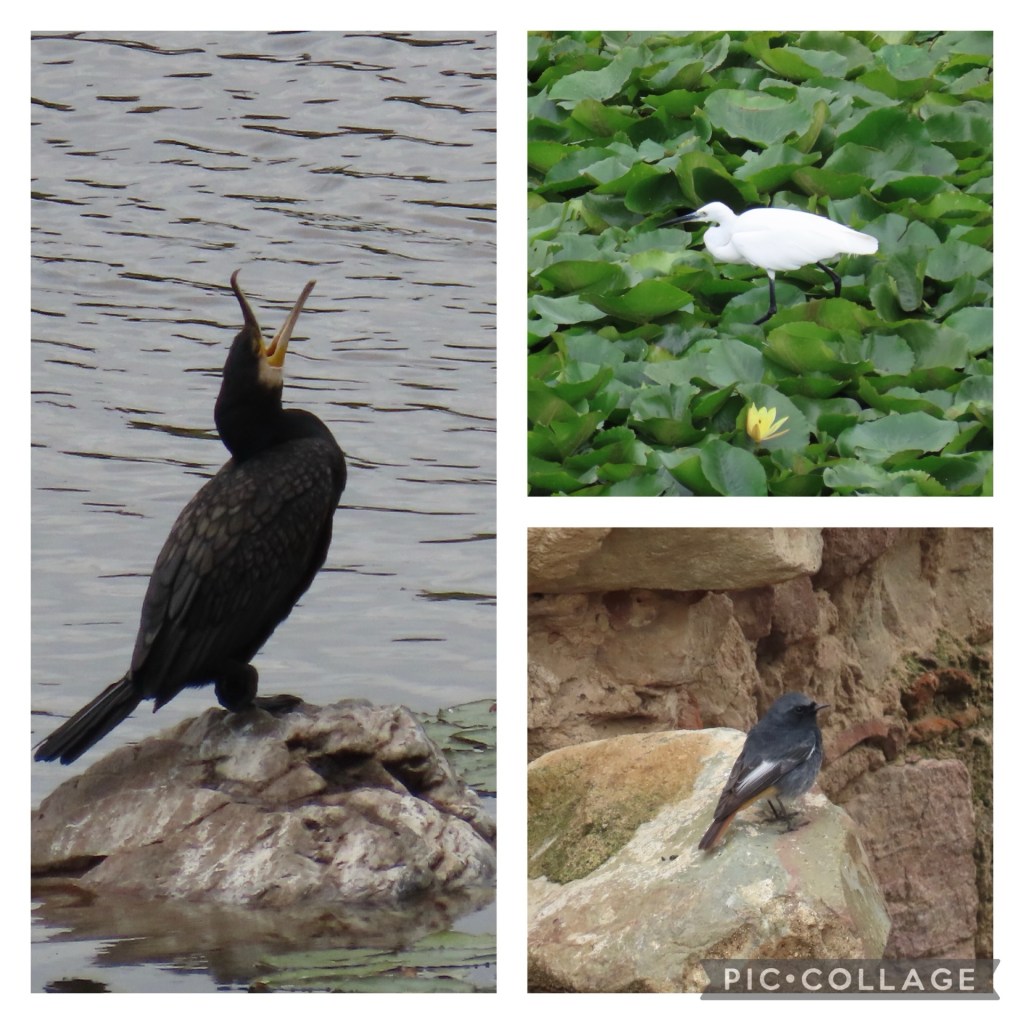
Some of the wildlife spotted during our stroll along the Guadiana river – Bottom left: Cormorant having a yawn; Bottom Middle: Egret; Bottom Right: Black Start (never seen one of these before…)
Yesterday, having packed our bags and the car again, we set out from our Calamonte Air BNB around 11am for Salamanca. The journey wasn’t too bad – about 280km (approximately 3 hours) and a nice mix of plains and farmland, mountains and low cloud, Black Kites (the bird!), rain and a bit of town driving – with a nice lunch along the way! We rolled up to our new place in Santa Marta de Tormes (just outside of Salamanca) just before 3pm.
The new accommodation is a small penthouse apartment, perfect for the two of us, with a lovely balcony and a distant view of the towers of the cathedral(s) in Salamanca… very nice and will certainly do us for the three nights we are here!
Again, we chose to come to Salamanca because (a) it looks amazing architecturally, and (b) because it’s another battle honour of the Royal Green Jackets! Having arrived mid- afternoon, we thought we would stretch our legs with a walk around the area we are staying (Santa Marta) and the first thing we saw (after locating the nearby supermarket for essential supplies) was this:

Here’s what this info board says: “The battle of Salamanca, fought on 22 July 1812, was undoubtedly one of the most decisive battles of the Peninsular War. The battle ended with a crushing victory for Lord Wellington’s allied army – composed of British, Portuguese, Germans and Spaniards – over a French army whose commander-in-chief was Marshal Auguste Marmont. As a result of the imperial debacle in Salamanca, King Joseph I Bonaparte (Napoleon Bonaparte’s older brother… historical note: Napoleon named Joseph King of Naples and the Two Sicilies (1806?) which he ruled until 1808 when Napoleon pressured him to abdicate the throne of Naples to accept the throne of Spain) – was forced to abandon Madrid and retreat to Valencia. Moreover, the French had definitively lost the bases and arsenals they needed to re-invade Portugal and rid themselves of the constant threat posed by the presence of a British-Portuguese army in that country once and for all. But above all, this defeat of the French, together with the disastrous Russian campaign of 1812, marked the beginning of the end of Napoleon’s domination of Europe.”
Seems like the world has always been at war – perhaps there is just a self-destruct element in the human psyche which makes it difficult for us all to live in peace? Seems humans always need to have a beef about something… or at least those that seek power & control 🥺? Anyway, seeing as this is the main reason we ended up in Salamanca, it was strange that this info board was the first thing we spotted!
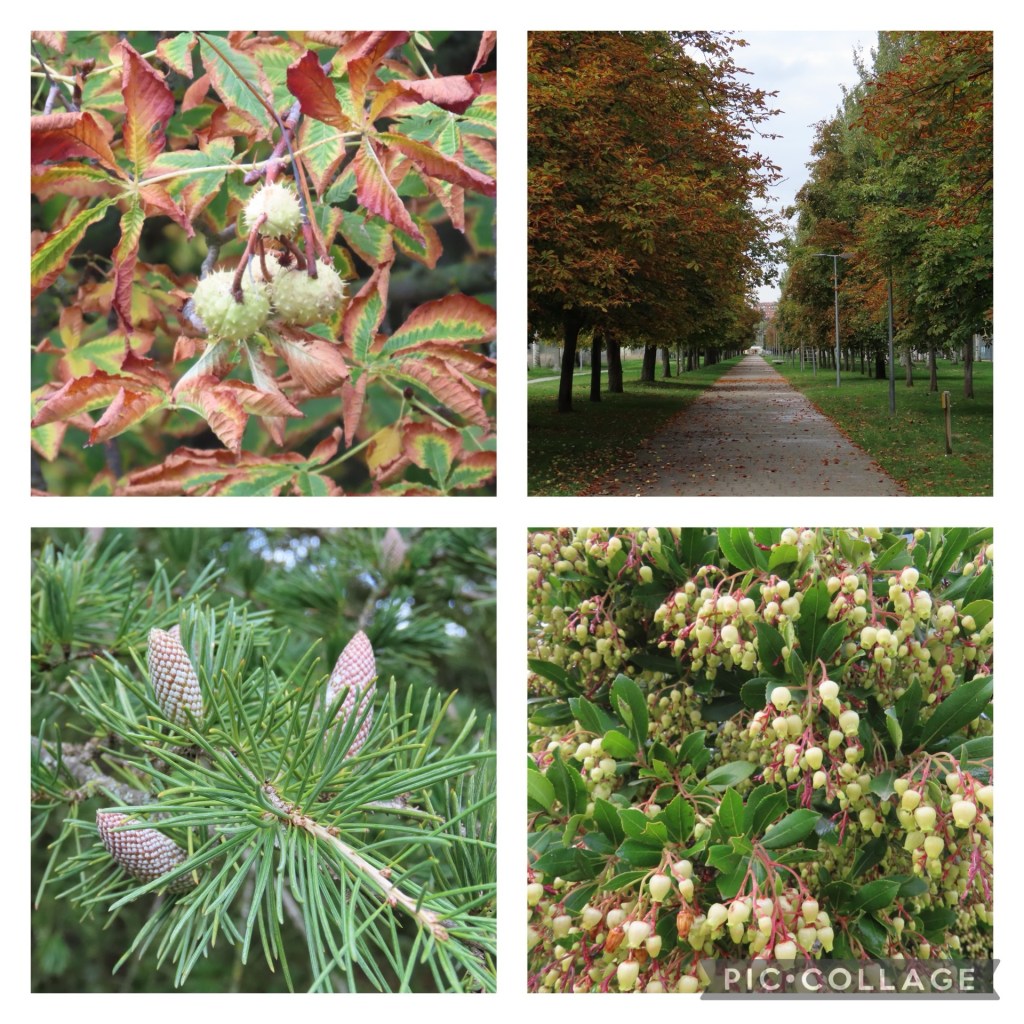
Our stroll led us over a small bridge to the Isla del Soto, a small island in the middle of the river Tormes, and another bridge to the opposite side of the river and Parque de La Aldehuela. Here’s some pics:

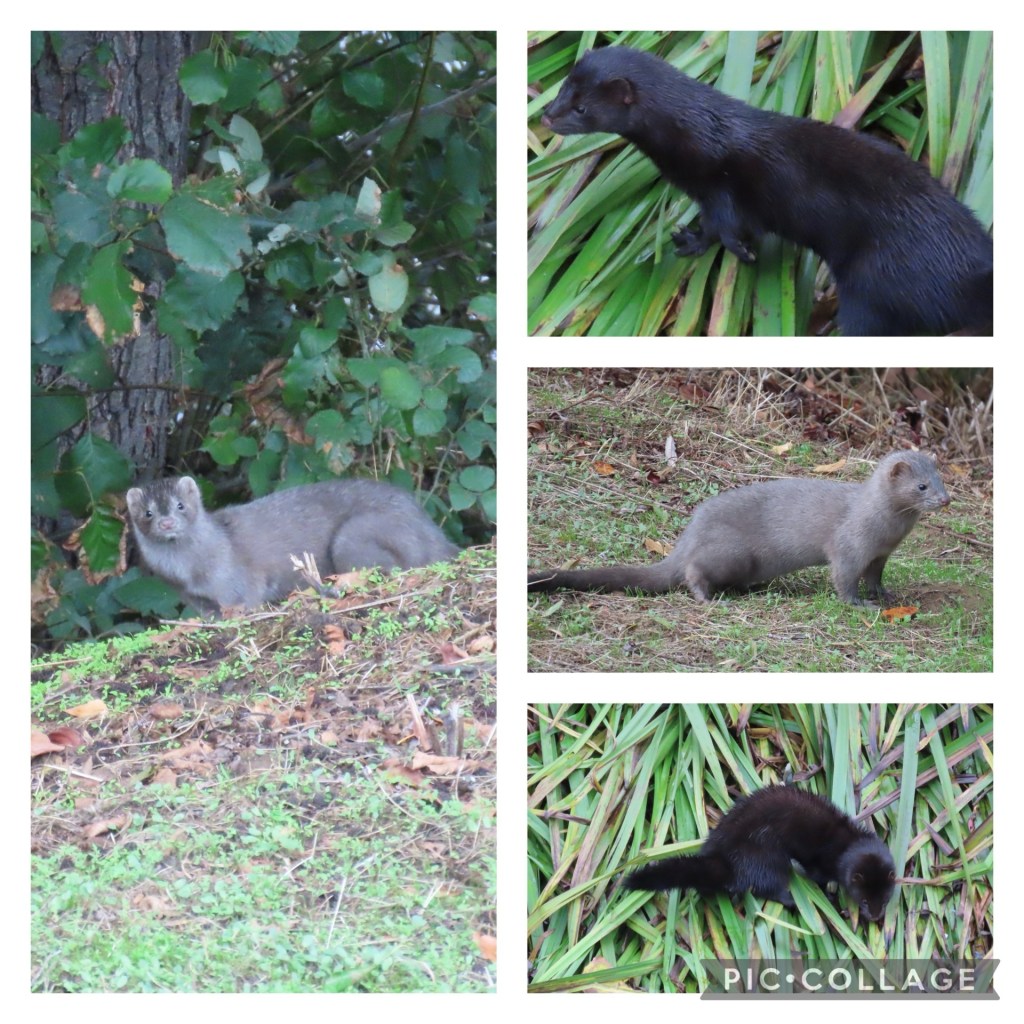
I love our little strolls as there is always something new to be seen. For instance, I’ve never seen a Mink before in the UK although I know they were introduced from America for fur-farming (boo!) in the 1900s so not native. The population in the wild in the UK is said to be the result of animal-rights activists releasing them from the fur-farms in the 1990s (although it is thought the feral population has been in place following escapees from captivity since the 1950s (good for them!)… Sadly, this wild population of non-native Mink is unpopular because they are effective predators. They are known to eat birds & their eggs (native and domestic fowl), small mammals, fish, amphibians, shellfish, crustaceans and are a particular risk to water vole and ground nesting bird populations because of this. That said, in Europe, it seems to be different as there is a native mink that, in Spain at least, is on the endangered list… therefore, we were amazed to spot not one but two during our walk!
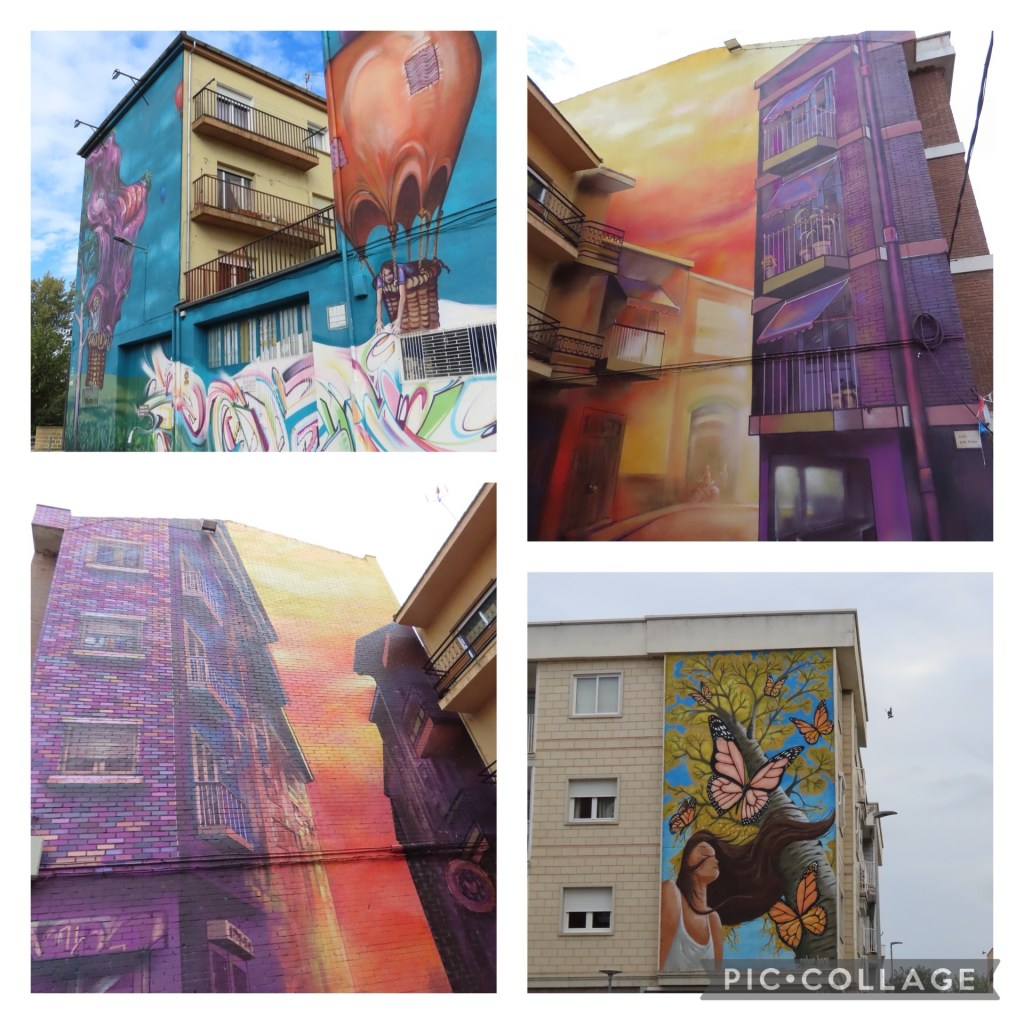
Some of the wall art around where we are staying in Santa Marta de Tormes
I thought I would break tradition and post this blog this morning as I think, from what I have read about the City of Salamanca, there will be plenty to include in it’s very own blog in a few days time…
Right, time to get them walking shoes back on and head out the door now it’s stopped raining! Más tarde, amigos míos! 😘
 All the gubbins…
Leave a comment